
Every dollar, accounted for.
Every life, changed.
100% of every contribution reaches children in Puerto Rico — and independent research shows exactly how far that dollar goes.

Why we commissioned this research
The Mark E. Curry Family Foundation is a private, independent family foundation established in 2015 by entrepreneur, fintech pioneer, and Puerto Rico resident Mark E. Curry, and his family.
In line with its mission and deep commitment to improving the well-being of children and families, both locally and nationally, the Foundation commissioned this independent study to better understand the realities and challenges faced by residential facilities serving abused and neglected children.
This initiative reflects the Foundation's dedication to using data-driven insight to promote lasting, systemic change that ensures opportunity for every child.
A foundation built on full accountability
Since 2010 we have funded 10+ Puerto Rico nonprofits with zero operational cost taken from donors.
An independent study, not a sales pitch
The Foundation commissioned Puerto Rico's leading research firm to measure the real social and economic value of residential facilities serving abused and neglected children.
An independent, interdisciplinary team
Estudios Tecnicos, Inc.
- Puerto Rico's leading consulting, research and planning firm.
- Established in 1985 to advance Puerto Rico's social and economic development through research, studies and technical consulting for public and private entities.
- Over 40 years, ETI has completed more than 3,500 projects underpinning the design, implementation and evaluation of public policy with social, economic and environmental impact.
- An interdisciplinary team of 38 professionals and a fieldwork unit of 50+ interviewers, plus specialized local and international collaborators.
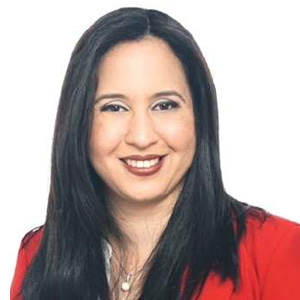
Anitza Cox, M.A., J.D.
A researcher and consultant in social policy for more than 25 years, and a leading scholar on topics related to Puerto Rico's nonprofit sector.
- 20+ years in academia — Professor at the UPR Graduate School of Public Administration.
- Law degree from the University of Puerto Rico; graduate certificate in Community Development & Public Administration, Rutgers University–Camden.
- Member of the AARP Advisory Council and the Board of Directors of Fundacion Angel Ramos.
A growing crisis for Puerto Rico's children
Child abuse and neglect cases reached their highest level in recent years in 2024.
The public-policy framework
Puerto Rico's response to child abuse and neglect is governed primarily by federal and local law and it works only when sectors act together.
Effective implementation demands the collaborative engagement of multiple sectors: child-welfare agencies, courts, nonprofit organizations, families and service providers, among others.
Department of the Family
Initiates the legal action and, if so determined by the Court, assumes custody of the child.
Attorney for Family Affairs
Represents the interests of the child throughout the proceedings.
Trial Court
Determines what is in the best interest of the child and orders appropriate action: a protective order; emergency, temporary or permanent custody; or termination of parental rights.
What foster care means
Foster care is the placement of a child following removal from his or her home, matched to the needs of the child and family across four settings.
Fewer facilities, more children to protect
The number of residential facilities is shrinking while need rises, making every supported organization more critical.
Of a median 29 children served per organization in 2024:
What is reshaping residential care
Prevention first
Emphasis on prevention, safe family reunification, and building parental capacity through evidence-based and trauma-informed programs.
Resources redirected
Redistribution of economic resources, giving priority to community-based preventive services over traditional residential care.
Stricter standards
New licensing and accreditation requirements, plus standards that promote family-like environments, increasing operational costs for institutions.
Prevention pays for itself
For every dollar spent, these organizations generate $2.29 in measurable economic and social benefit.